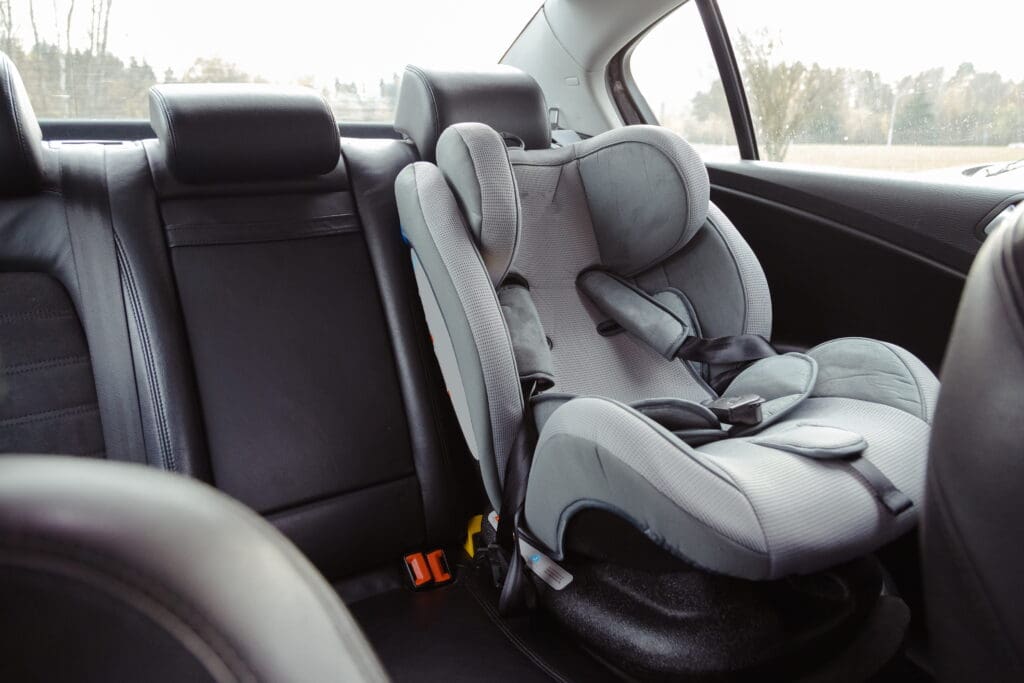
Car accidents are a leading cause of injury and death for children in the United States. In Georgia, the law sets minimum requirements for car seat safety, but following the best practices can provide even greater protection.
The purpose of this guide is to help parents navigate Georgia’s car seat laws, breaking them down by age, height, and weight. We will also review front-seat guidelines, booster seat requirements, and what to do after an accident.
Buckle up, and let’s get started.
What Are the Car Seat Laws in Georgia?
Georgia’s car seat laws require that all children under the age of 8 must be in an appropriate child restraint system. This includes car seats, booster seats, or seat belts, depending on their age, weight, and height.
Below are some of the key car seat laws in Georgia:
- Children under 8: Must use an approved child restraint system, such as a booster seat.
- Height Requirement: Children who are under 4’9” (57 inches) tall must remain in the back seat.
Driver Responsibility: In Georgia, the driver—not just the parents—holds the responsibility for ensuring that all child passengers are properly restrained. Failing to comply can result in fines and points against the driver’s license.
Georgia Car Seat Laws by Age, Height, and Weight
Rear-Facing Car Seats (Infants & Toddlers)
In Georgia, rear-facing seats are required for infants and toddlers until they reach at least 1 year old. However, the car seat laws set minimums, and experts recommend keeping children rear-facing as long as possible, ideally until they exceed the maximum weight or height limits specified by the car seat manufacturer.
Forward-Facing Car Seats
Once a child reaches 1 year old and weighs 20 lbs, they can transition to a forward-facing car seat with a 5-point harness. Again, this is the minimum requirement—safety experts recommend keeping children in a forward-facing seat as long as possible to ensure optimal safety.
Booster Seat Requirements in Georgia
Booster seat laws apply to children under 8 years old or under 4’9″ tall. A booster seat helps ensure that the seat belt fits correctly across the child’s lap and chest. Many children need a booster seat even after turning 8 years old, and parents are encouraged to keep their children in a booster until the seat belt fits properly.
Is Brake Checking Illegal in Georgia?
In Georgia, brake checking is considered aggressive driving. Statute O.C.G.A. § 40-6-397 describes aggressive driving as the operation of a vehicle with the intent to “annoy, harass, molest, intimidate, injure, or obstruct another person.” Brake checking, therefore, falls under this category, as its primary intent is to provoke or intimidate another driver.
- Aggressive Driving: In Georgia, if you brake check someone, you could be charged with aggressive driving. This involves any intentional behavior designed to interfere with another driver’s ability to drive safely.
- Reckless Driving: If the brake check is deemed excessive or performed dangerously, it could be classified as reckless driving, which carries more severe penalties.
If the brake check leads to an accident, the front driver may face criminal charges or liability, depending on the severity of the incident.
Table: Georgia Car Seat Laws
Topic | Georgia Law (Minimum Requirement) | Best Practice |
| Rear-facing seats | Required until 1 year old | Rear-facing as long as possible, until the maximum height/weight is reached |
| Forward-facing seats | Allowed once minimum age/weight are met (1 year, 20 lbs) | Keep the child in a harnessed forward-facing seat as long as possible |
| Booster seats | Required until age 8 or 4’9” tall | Keep the child in a booster until the seat belt fits properly (often beyond age 8) |
| Seat belt only | Allowed at age 8 or 4’9” height | Seat belt only after a 5-step fit test |
| Front seat riding | Allowed with exceptions (if there is no back seat and the child weighs at least 40 lbs) | Keep the child in the back seat until age 12-13 |
When Can a Child Ride in the Front Seat in Georgia?
In general, children under 8 years old and under 57 inches in height must ride in the back seat. However, there are a few exceptions to these car seat laws:
- Vehicle Does Not Have a Back Seat: Some vehicles, such as pickup trucks, do not have a back seat.
- The Back Seat Is Occupied by Other Children: If all available back seats are already occupied by properly restrained children, a child may ride in the front seat.
In these cases, the child must weigh at least 40 pounds and be secured correctly in a car seat or booster seat.
Airbag Dangers
Airbags are designed for adult-sized bodies, not children. They deploy with significant force and can cause serious injury or even death in younger children. Airbags can cause:
- Head and neck injuries
- Chest trauma
- Suffocation or fatal injuries in small children
Best Practice Recommendation: The American Academy of Pediatrics (AAP) recommends that children ride in the back seat until they are at least 12-13 years old to avoid the risks posed by airbags and proximity to impact zones.
Common Car Seat Safety Mistakes Parents Make
Despite best efforts, many parents make common mistakes when it comes to car seat safety. These include:
- Loose Installation: Car seats should be securely installed. A loose seat can increase the risk of injury.
- Incorrect Harness Positioning: The harness straps should fit snugly over the child’s shoulders.
- Bulky Coats: Winter coats can interfere with proper harness positioning.
- Expired or Previously Damaged Seats: Car seats have expiration dates and should not be used after a crash.
- Misunderstanding Manufacturer Limits: Always follow the manufacturer’s height and weight limits.
Car Seat Installation Help
If you’re unsure about your car seat installation, fire departments and organizations like SafeKids Worldwide offer free installation and inspection services.
Why Car Seat Safety Matters in Car Accidents
Car seats are proven to reduce the risk of injury in car accidents. A study from the Georgia Attorney General’s Consumer Protection Division shows that booster seats can reduce injury risk by up to 59%, and rear-facing seats can reduce injury risk for infants by 71%.
The AAP advocates for rear-facing seats as long as possible, citing their ability to better protect a child’s head, neck, and spine in the event of a crash.
What to Do If Your Child Is Injured in a Car Accident
If yoIf your child is involved in a car accident, follow these steps:
- Seek Medical Care Immediately: Even if injuries seem minor, seek immediate medical attention for a proper evaluation.
- Do Not Reuse a Car Seat After a Crash: Car seats are designed for one-time impact use. If your child’s car seat was involved in an accident, it should be replaced.
- Document the Scene: Take photos of the accident scene, your car seat, and any visible injuries.
- Insurance Considerations: Be sure to report the accident to your insurance company promptly.
- Contact an Attorney: Legal guidance is crucial when dealing with insurance claims or accidents with disputed fault. Contact an Atlanta car accident lawyer before speaking to insurance companies about your family’s injuries.
- Car Seat Replacement: You may be able to recover the costs of replacing the car seat. Safety guidelines recommend replacing the car seat after any accident.
Georgia Car Seat Laws FAQs
What are the car seat laws in Georgia?
Children under age 8 must use an approved child restraint system, and children under 57 inches (4’9”) tall must ride in the back seat. The driver (not just the parent) is legally responsible for proper restraint use.
What are Georgia’s booster seat requirements?
Booster seats are required for children under age 8 or under 4’9” tall, and they must be used with a lap and shoulder belt.
How tall does a child need to be to stop using a booster seat?
Children can stop using a booster seat when they are 4’9” tall, but the seat belt must fit correctly. The lap belt should sit low on the hip, and the shoulder belt should rest on the shoulder, not the neck.
Can a child ride in the front seat in Georgia?
Generally, children under age 8 and under 57 inches must ride in the back seat. Exceptions apply if the vehicle has no back seat or if all back seats are occupied by properly restrained children.
What happens if you don’t follow Georgia car seat laws?
Drivers may face fines up to $50 and points against their license for violations. Continued violations could result in higher penalties.
How a Georgia Car Accident Lawyer Can Help After a Crash Involving a Child
If your child is injured in a car accident, a skilled Georgia car accident lawyer can help protect your family’s rights for a successful recovery.
At Weatherby Law Firm, we help auto accident injury victims:
- Navigate the confusing injury claims process
- Counter unfair insurance denials
- Secure fair compensation for medical expenses and car seat replacement
Contact Weatherby Law Firm for a free consultation to discuss your case and ensure your family gets the compensation they deserve.