 Call Now

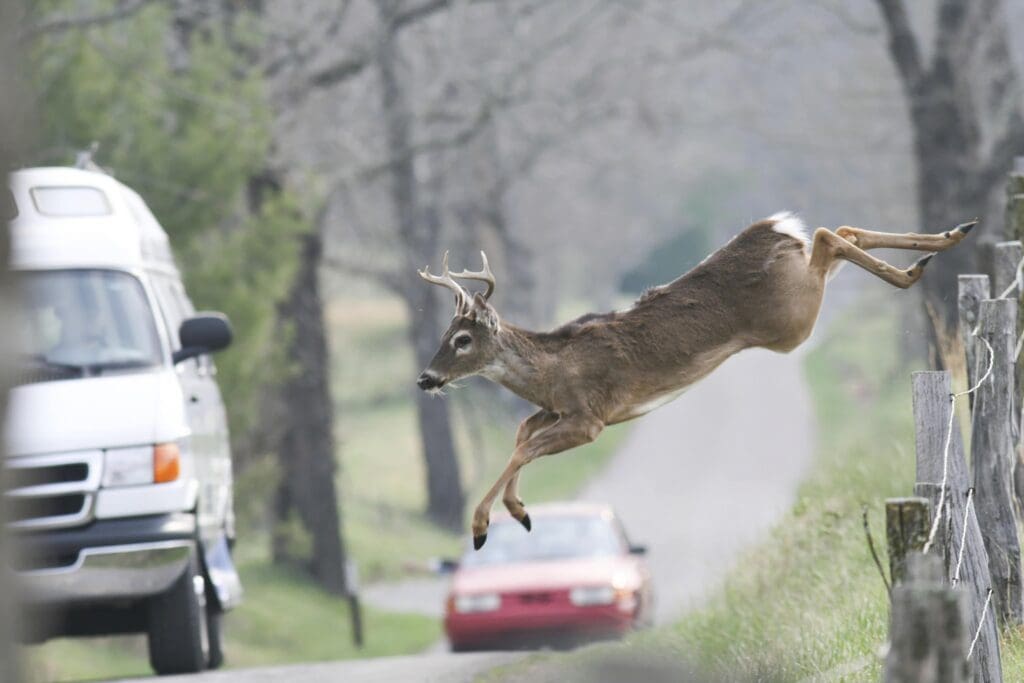
Hitting a deer is scary, but it happens far more often than most Georgia drivers realize. If you’re searching for what to do when you hit a deer, you’re likely dealing with shock, damage to your vehicle, or questions about whether you need to call the police or your insurance company.
This guide explains what to do when you hit a deer in Georgia so you can stay safe, follow the law, and avoid insurance issues.
Why Deer Collisions Are So Common in Georgia
Georgia sees thousands of deer-related crashes every year. Georgia drivers face higher risks simply due to the state’s geography and wildlife patterns. Understanding these patterns helps explain why deer crashes are treated differently from typical car accidents.
According to the Georgia Department of Driver Services (DDS), deer collisions increase during certain seasons and times of day, especially when deer movement peaks.
Why these crashes happen so often:
- Peak activity at dawn and dusk. Deer move most during low-light hours, making them harder to see.
- Seasonal spikes. October through January is the rut (breeding season), when deer are far more active and unpredictable.
- Georgia’s landscape. Many highways cut through wooded and semi-rural areas, even near cities. That mix increases the chances of deer entering the roadway.
- Late winter feeding. When natural food sources drop, deer wander closer to busy roads.
Immediate Steps to Take After Hitting a Deer
“What do I do if I hit a deer?”
If you hit a deer, safety comes first. The scene may be confusing, especially if the deer is injured or your vehicle is damaged. Follow these steps to protect yourself, your passengers, and other drivers. If you’re unsure what to do when you hit a deer, start with these safety steps.
1. Pull safely off the road and turn on your hazard lights.
Move to a safe shoulder or parking area if possible. Activate your hazard lights to alert approaching drivers.
2. Check yourself and your passengers for injuries.
If anyone is hurt, call 911 immediately.
3. Do NOT approach the deer.
Injured deer can be unpredictable and dangerous. Stay back and wait for animal control or police if needed.
4. Call 911 if there are injuries, road blockage, or significant vehicle damage.
A deer lying in the roadway can lead to additional collisions, so emergency assistance may be required.
5. Document the scene.
Maybe the last (but one of the most important) thing on your mind after you hit a deer: an insurance claim. Take photos of the vehicle damage, the deer, debris, skid marks, and the surrounding road. This documentation will help your claim later on, and you’ll be glad you took the time to capture it.
6. If another vehicle was involved, exchange information.
Even if the deer caused the crash, multiple vehicles make it a standard accident scene under Georgia law.
Georgia’s Laws About Reporting Deer Collisions
Not every deer collision in Georgia has to be reported — but some must be under state law. Part of knowing what to do when you hit a deer is understanding when Georgia law requires you to report the crash. Two key Georgia statutes explain when drivers are required to call the police.
O.C.G.A. § 40-6-273 — When You MUST Report an Accident
You must report a crash to local law enforcement if it involves:
- Injury or death
- $500 or more in property damage
- A hazard on the roadway (such as a dead or injured deer blocking traffic)
If hitting the deer caused your bumper to crumple, your hood to bend, or your headlights to break, you’ve likely exceeded $500 in damage. Modern vehicles can rack up large repair bills from even minor wildlife impacts, so it’s usually safer to assume the threshold is met.
O.C.G.A. § 40-6-274 — When You Do NOT Have to Report
If only your vehicle is damaged, no one is hurt, and the deer is off the roadway, you’re generally not required to file a police report.
You must stay at the scene until it’s safe to leave.
If the deer is still in the road or if other drivers are at risk, you cannot drive away. Georgia law requires you to remain at the scene long enough to ensure safety and compliance.
Taking the Deer Home — O.C.G.A. § 27-3-28
Georgia law allows drivers to keep a deer they hit by accident. However, the deer must not block traffic, and you should confirm it is safe and legal to remove it. We recommend calling authorities if the deer is large, poses a hazard, or needs removal by animal control.
When the Collision Leads to Injury
Especially when the collision leads to another vehicle crash or injury, legal issues like fault and liability become more complex. If you’re still unsure what to do when you hit a deer, consider contacting an Atlanta car accident lawyer.
When You Should Call the Police Anyway — Even If It’s Not Required
There are several reasons why calling the police after hitting a deer is simply a smart move, even when Georgia law doesn’t demand it.
Why making the call helps:
- Insurance companies prefer police reports. It gives them objective proof that the damage was caused by a deer.
- It protects you from blame. If another driver later hits the same deer, someone may question your role in leaving the scene.
- It helps establish a timeline. A report documents the date, time, and location — all critical for insurance claims.
- Animal control can safely remove the deer. Officers can contact the proper authorities to clear the roadway.
Does Car Insurance Cover Hitting a Deer in Georgia?
Another key part of what to do when you hit a deer is knowing how insurance coverage applies.
The good news: Most deer collisions are covered by comprehensive insurance. This differs from collision coverage, and many drivers don’t realize the distinction.
What comprehensive insurance covers
Comprehensive typically pays for damage caused by deer or other wildlife collisions, weather damage, or vandalism after you’ve paid your deductible.
Liability-only policies will NOT cover deer damage
If you carry liability-only insurance, your policy does not cover vehicle damage from deer collisions. That coverage only applies to damage you cause to someone else.
Collision coverage may apply if you swerve
If you avoid the deer but hit a tree, guardrail, or another vehicle, collision coverage may apply instead of comprehensive.
PIP or MedPay for injuries
If you or your passengers were hurt, MedPay or PIP may help cover medical bills.
Do you need a police report for insurance?
It’s not legally required, but many insurers strongly prefer — or even request — one. Filing a claim without it is possible, but having a report can prevent delays or disputes.
What Happens If You Don’t Report a Deer Collision?
When you’re wondering what to do when you hit a deer in your car, don’t forget to file a police report. Failing to do so can cause more problems than many drivers expect, even when it is not a legal requirement.
You may violate Georgia reporting laws
If there are injuries, fatalities, or more than $500 in damage, you’re legally required to report the crash. Not doing so may result in penalties.
Your insurance claim may be denied or delayed
Insurance companies often want proof that a deer caused the damage. Without a report, the insurer may question the cause, or your claim may be misclassified as a regular collision instead of a comprehensive claim. In some cases, you may face a higher deductible or higher premiums, or the claim could be denied altogether.
You may face liability issues
If you leave the scene and the deer remains on the roadway, another driver could hit it, resulting in injury. That driver, or their insurer, may argue that you contributed to the hazard.
You lose important evidence
A police report helps document when and where your vehicle was damaged. This documented information protects your claim, reduces disputes, and prevents confusion later.
When a Deer Collision Becomes a Personal Injury Claim
Although many deer collisions result only in property damage, some situations can lead to serious injuries and liability concerns. A driver may be entitled to compensation depending on how the crash occurred.
A deer collision may become a personal injury claim when:
- You swerved and hit another vehicle
If avoiding a deer causes a multi-car crash, liability becomes much more complicated. Georgia’s insurance companies may investigate who had the right-of-way and how the collision occurred.
- Another driver hits you while avoiding the deer
Multi-vehicle collisions caused indirectly by wildlife can still lead to injury claims.
- You hit a fixed object while avoiding the deer
Crashing into a tree, sign, or guardrail may trigger collision coverage and potential injury-related compensation.
- Poor road conditions or property hazards contributed
If the road was known to have poor lighting, missing signage, or other hazards, a property owner may share some responsibility.
- Severe cases may lead to wrongful death claims
Unfortunately, deer-related crashes can be fatal, especially at highway speeds.
Weatherby Law Firm can help determine whether the circumstances surrounding the deer collision support an injury claim.
What to Do If You’re Injured After Hitting a Deer
If you were hurt in a deer collision — or while swerving to avoid one — taking the right steps protects both your health and the potential legal claim.
- Seek medical attention immediately.
Some injuries are not obvious right away. Early treatment creates a clear record.
- Follow all treatment recommendations.
Insurance companies may argue your injuries aren’t serious if you delay care or skip follow-ups.
- Document everything.
Keep records of medical bills, repair estimates, injury and damage photos, dash cam footage, and witness statements.
- Notify your insurance company promptly.
Report the collision, but avoid making assumptions about fault.
- Don’t give a recorded statement without legal guidance.
Insurers often use recorded statements to minimize your claim.
- Contact an attorney if you’re unsure of your rights.
An experienced car accident lawyer can review the crash, your injuries, and your options.
How Weatherby Law Firm Can Help After a Deer-Related Accident
Most deer collisions involve only property damage, but when an injury occurs — or when swerving causes a multi-vehicle crash — the situation becomes far more complex. Insurance companies often dispute or minimize wildlife-related claims, especially when liability is unclear.
Weatherby Law Firm works with clients across Atlanta and throughout Georgia to:
- Investigate the crash and determine how the deer played a role
- Gather evidence such as dash cam footage, scene photos, and police reports
- Review insurance policies and claim requirements
- Communicate directly with insurers to prevent claim delays or unfair denials
- Evaluate liability if multiple vehicles or hazardous road conditions contributed
- Protect your rights when injuries are involved
If a deer collision escalates into a more serious accident, you don’t have to handle the insurance process alone. Contact Weatherby Law Firm for hands-on, trustworthy legal support rooted in local experience.
Frequently Asked Questions
Is it illegal not to report hitting a deer in Georgia?
You’re legally required to report the crash if there are injuries, fatalities, or more than $500 in property damage. If only your vehicle was damaged and the deer is not creating a roadway hazard, reporting is not mandatory — but it’s still recommended for documentation.
Do I need a police report for a deer insurance claim?
Not legally. However, insurers often request a report to verify the cause of the damage and expedite claim approval.
Should I swerve to avoid a deer?
No. Swerving often leads to more severe crashes. Georgia DDS recommends braking firmly while maintaining your lane.
Does car insurance cover hitting a deer?
It depends. Comprehensive car insurance generally covers deer collisions, while liability-only policies do not. Collision coverage may apply if you swerved and hit another object. MedPay or PIP may help with injury expenses.
Can I take the deer home if I hit it in Georgia?
Yes. O.C.G.A. § 27-3-28 allows drivers to keep a deer they hit, provided it’s removed safely and does not block traffic.
What should I do if another car was involved in the deer crash?
Treat it as a standard multi-vehicle accident. Exchange information, call the police, take photos, and consider speaking with an attorney because liability becomes more complex.
Will my insurance go up after hitting a deer?
Comprehensive claims usually do not raise premiums, but policies vary by insurer. A police report can help verify the cause.
Final Thoughts — Protect Yourself After a Deer Accident
Deer collisions happen quickly and unexpectedly, but knowing what to do when you hit a deer helps you stay calm, safe, and protected afterward. The most important steps include documenting the scene, understanding when you must report the crash, and notifying your insurance company promptly. When in doubt, calling the police helps create a clear record that can prevent future disputes.
If you suffered injuries, were involved in a multi-vehicle crash, or have questions about liability after a deer collision, Weatherby Law Firm is here to help.
Contact us today for clear, informed guidance and strong representation to ensure you receive the compensation you’re entitled to.


